skip to Main Content

Bill 27 – Working for Workers Act, 2021 and Disconnecting from Work Policies

As a result of the Covid-19 pandemic, Ontario’s labour market has experienced significant disruptions and a permanently shifted work landscape. Employers are grappling with redefined work locations, rapidly changing public health standards, and the need for economic revitalization. As part of the province’s recovery scheme, Monte McNaughton, Minister of Labour Training and Skills Development, established the Ontario Workforce Recovery Advisory Committee (OWRAC). The Committee’s mandate is to “provide recommendations to position Ontario as the best place in North America to recruit, retain and reward workers.” Its work centers around three pillars: economic recovery, strengthening Ontario’s competitive position, and supporting workers. Integral to the Committee’s work were community stakeholder consultations involving workers, employers, and unions, which invited submissions by July 31, 2021. 

Read More

A Deeper Dive into Exemptions from Mandatory COVID-19 Vaccination Policies

In our recent blog, we discussed the consequences that employees may face for not receiving government-approved COVID-19 vaccinations. We also touched on the legitimate medical or religious reasons that some employees may have for refusing or being unable to be vaccinated. In this blog, we’ll take a deeper dive into what sorts of exemptions employers should be prepared to expect (if they have not already come across them) and the steps they can take to determine whether employees have a valid request for an exemption from vaccination, along with the required accommodations. 

Types of COVID-19 Mandatory Vaccination Exemptions Employers May Encounter

Employers should keep an eye out for valid medical and religious/creed-based exemptions employees may have from vaccination. 

The College of Physicians and Surgeons of Ontario has provided some examples (of which it emphasizes there are few) of acceptable medical exemptions from the COVID-19 vaccination:

Read More

Vaccine Passports: Which Businesses will Require Them and Who is Exempt?

On September 1, 2021, the Ontario government announced that, beginning September 22, 2021, Ontario residents will be required to provide proof of full COVID-19 vaccination (meaning that both doses of an approved COVID-19 vaccine must have been administered at least fourteen days prior), in the form of a printout or PDF receipt of vaccination status, plus photo identification, in order to enter certain non-essential business sites. A vaccine verification app and QR code, to be used by various businesses and organizations, are currently under development. 

Where Proof of Vaccination Will and Will Not be Required in Ontario 

The vaccine certificate program requires that non-essential businesses restrict entry to their premises to those who have valid proof of vaccination, as outlined above. Non-essential businesses include restaurants (indoor dining only); nightclubs (indoor and outdoor areas); theatres, music festivals, concerts, and cinemas; night clubs, strip clubs, bathhouses, and sex clubs; racing venues; casinos and gaming establishments; fitness and recreational centres (except youth recreational sport); and meeting spaces.

Read More

Unvaccinated Employees and Mandatory Vaccination

Unvaccinated Employees and Mandatory Vaccination

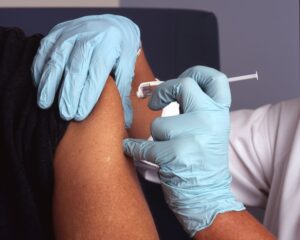
Photo by Ivan Diaz on Unsplash

Both employers and employees are asking questions related to mandatory vaccinations and consequences for employees who don’t get them. Here we run through some of those FAQs!

Q: If vaccinations are deemed to be “mandatory” for workers, are there any legal exemptions?

A: Yes, in some cases there will be legal exceptions to a job requirement that employees be vaccinated. These exceptions come from the Ontario Human Rights Code (the “Code”), which prohibits discrimination in employment based on protected grounds. The protected grounds likely to be engaged with respect to a vaccination requirement are disability and creed. If the exemption is based on a medical reason, it will fall under disability. Religious reasons will fall under creed.

Read More

Time to Reconvene your Joint Health & Safety Committee

Once workers are back together in the workplace, employers will want to ensure that their health and safety policies and programs have been reviewed and account for all the changes and new ways of doing things. Your Joint Health and Safety Committee will play a role! 

What’s a Joint Health and Safety Committee?

In Ontario, one legal requirement of a compliant health and safety program (H&S Program) under the Occupational Health and Safety Act (OHSA) is for workplaces that regularly employ 20 or more workers to establish a Joint Health and Safety Committee (JHSC). A JHSC is made up of employees and managers who meet on a regular basis to deal with health and safety issues in the workplace. The group is required to have a balanced number of employee representatives and management representatives. Employers must consult with the JHSC about their H&S Program and employees can directly approach their JHSC with any health and safety concerns. 

Read More
Back To Top